The GGI Unpacked: China’s 4 Surprising Truths
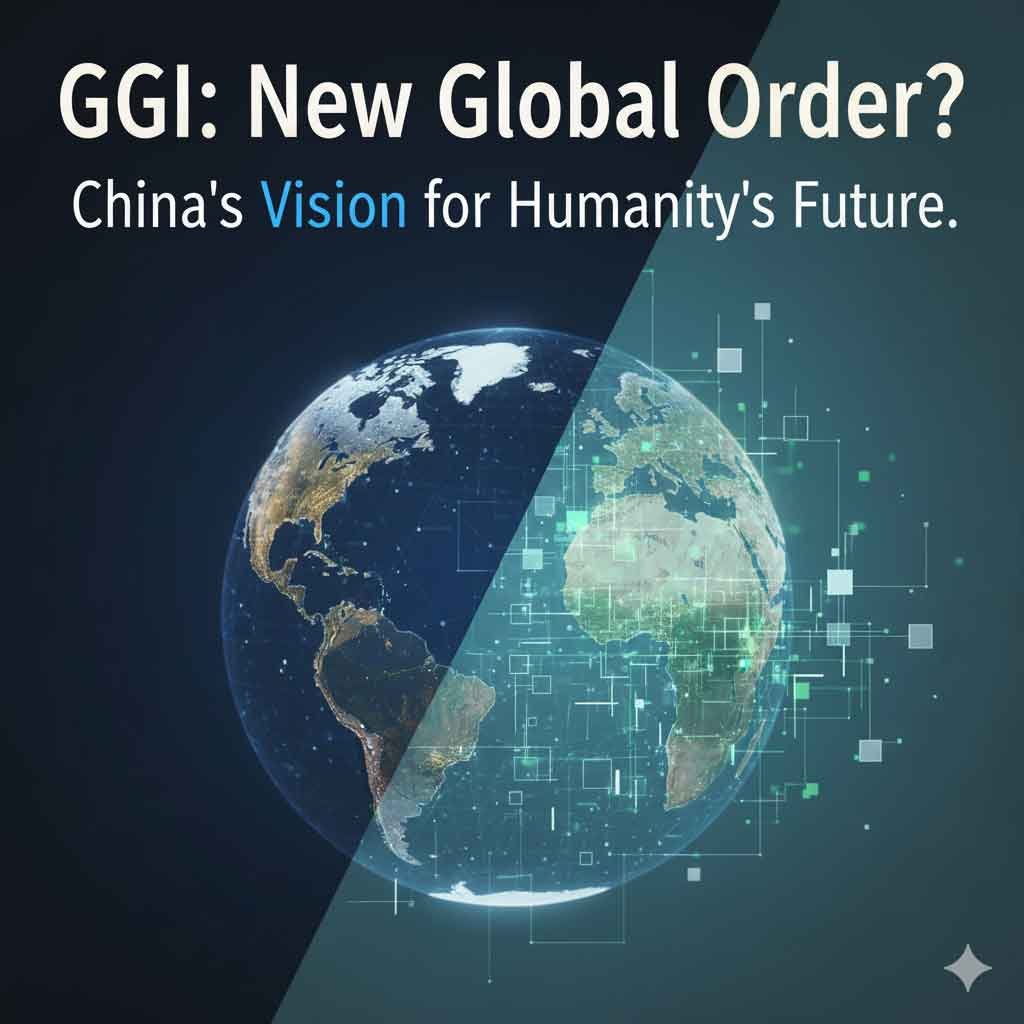
The GGI Unpacked: 4 Surprising Truths About China’s Global Blueprint
The current international landscape is marked by a profound trust deficit, pushing the world “towards the rule of the jungle instead of the rule of law, inequality instead of equality, injustice instead of justice and hegemony instead of universal harmony.” In this turbulent environment, the authority and effectiveness of the United Nations and the very concept of multilateralism face unprecedented challenges. The China’s GGI is the solution to this problem!
It is against this backdrop that China has proposed the Global Governance Initiative (GGI). Presented as a timely response to today’s intricate global challenges, the GGI envisions a more just and equitable global governance system. This article unpacks four of the most impactful, and perhaps surprising, takeaways from this significant proposal, analyzing what they mean for the future of the international order.
Takeaway 1: The GGI Prioritizes Strategic Renovation, Not Risky Revolution
Contrary to the common assumption that a rising global power would seek to upend the existing international order, the GGI’s core approach is one of reform. The initiative explicitly states that its goal is not to “reinvent the wheel.” Instead, it advocates for “adjustments and improvements in the existing global governance system to better meet the needs of the times.”
From a geopolitical perspective, this framing is a crucial strategic move. By positioning the GGI as a call for renovation rather than revolution, it aims to lower the barrier for buy-in from other nations. This makes the initiative seem less threatening and more collaborative, a tactic designed to avoid provoking immediate, unified opposition from established powers. It is presented as a constructive effort to make the current global architecture more representative, fair, and effective, rather than a plan to tear it down and start from scratch.
Takeaway 2: The Initiative Targets Three Specific Failures in the Current Order
The GGI is not a vague philosophical proposal; it is a direct response to what its proponents see as three critical failures within the existing international system. These identified deficiencies form the foundational rationale for the initiative’s call to action:
- Serious under-representation of the Global South: The initiative argues that the collective rise of emerging markets necessitates boosting the representation and voice of developing countries in order to redress historical injustice.
- Erosion of authoritativeness: This points to the failure to effectively observe the purposes and principles of the UN Charter. The GGI notes specifically that “Resolutions of the Security Council have been challenged” and that “Unilateral sanctions… have violated international law and disrupted the international order.”
- Urgent need for greater effectiveness: The initiative highlights that the implementation of the UN 2030 Agenda for Sustainable Development is “seriously lagging behind” and identifies significant governance gaps in new frontiers like artificial intelligence (AI), cyberspace, and outer space.
This erosion of authoritativeness, in particular, leads directly to the GGI’s most pointed proposal: a redefinition of the very rules that govern the international order.
Takeaway 3: Its Goal is to Reclaim the Definition of a ‘Rules-Based Order’
A central pillar of the GGI is its explicit stance on international law, which presents a direct challenge to the Western-led interpretation of global norms. The initiative seeks to counter what it calls the “vague rhetoric of a ‘rules-based order'” by providing a clear and specific definition. According to the GGI, the rules are “the basic norms of international relations based on the purposes and principles of the UN Charter.”
The crucial implication here is the GGI’s attempt to re-anchor international relations in a universally agreed-upon framework—the UN—rather than in norms defined and selectively applied by a small group of powers. It directly addresses the foundational questions of “who governs,” “for whom,” and “how to govern.” The initiative calls for international law and rules to be “applied equally and uniformly, without any double standards or imposition,” and insists that major countries must take the lead in defending this universal interpretation of the rule of law.
Takeaway 4: Its Proponents Acknowledge a Steep Uphill Battle Against Inertia and Suspicion
Despite its ambitious vision, the GGI’s framework is realistic about the path to implementation, acknowledging that it is fraught with challenges. The initiative identifies three major obstacles that stand in its way:
- Western Resistance: Some major powers view the initiative as a threat to their historical influence within the international system.
- Diverging Interests among Developing Countries: This internal diversity could hinder the formation of a unified front advocating for deep reform.
- Suspicion of China’s Intentions: Strategic rivals may view the initiative primarily as a geopolitical maneuver designed to expand Beijing’s influence.
At its heart, the GGI is presented as an attempt to break the inertia that has paralyzed the international system. It is positioned not just as a proposal but as a “genuine opportunity to rebuild trust among nations—if met with sufficient political will and a sincere readiness by all parties to move beyond the logic of dominance toward a fair partnership that shapes a shared future for all.”
GGI: A Choice Between the Past and a Shared Future
At this critical juncture, when global governance is like rowing upstream—either advance or retreat—the proposal of the GGI comes at a timely moment. It is a comprehensive call to action arguing for the reform of an international system to make it more just, equitable, and capable of addressing the complex challenges of the 21st century. By advocating for reform over replacement and grounding its proposals in the UN Charter, the GGI presents a distinct vision for the future of global cooperation.
Humanity has become a closely intertwined community with a shared future. Enhancing global governance is the right choice for the international community to share in development opportunities and address global challenges.
For more updates, check our YouTube Channel, and visit our website. Stay tuned!

Post Comment